Performance Models
How Looties Built an AI-Powered Marketplace with Pruna

Quentin Sinig
Go-to-Market Lead
Speed Is Not a Nice-to-Have in a Marketplace
Looties is a marketplace where developers buy and sell collector merch: conference swag, limited-edition hoodies, and all the tech stuff that usually ends up in an already full closet.
From the very beginning, one thing was obvious. The faster someone can list an item, the more likely that item is to sell. This is not theoretical. Companies like Leboncoin (source) or Photoroom (source) have shown that reducing the time it takes to create a listing directly improves conversion. People hesitate less, abandon less, and publish more.
So Looties made a clear product decision early on. AI would not be added to look innovative. It would be used to remove friction from the listing flow and improve the user experience.
Where Listing Friction Actually Comes From
Creating a listing sounds simple until you watch real users do it. Writing a description takes time and mental energy. Many sellers either overthink it or leave fields half empty. Images are another issue. Most photos are taken quickly on a desk or a couch, with uneven lighting and cluttered backgrounds. For example, Leboncoin offers, for some items, a basic background removal, but the result often feels cheap, which does not work well for collector items. Finally, any extra step, any hesitation, any waiting time reduces the number of listings that actually get published.
Two AI Tasks, No Room for Complexity
Looties focused on two very concrete AI tasks.
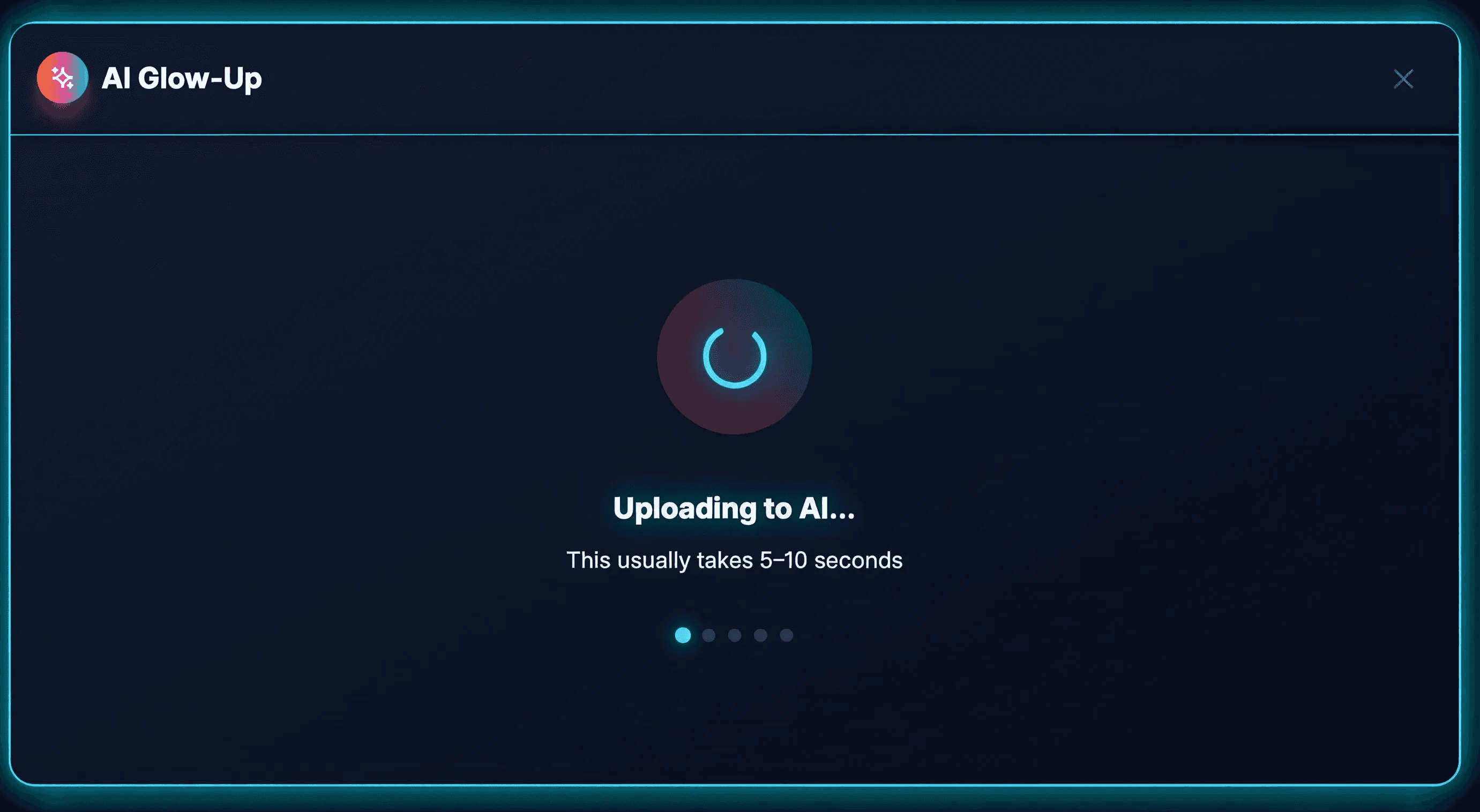
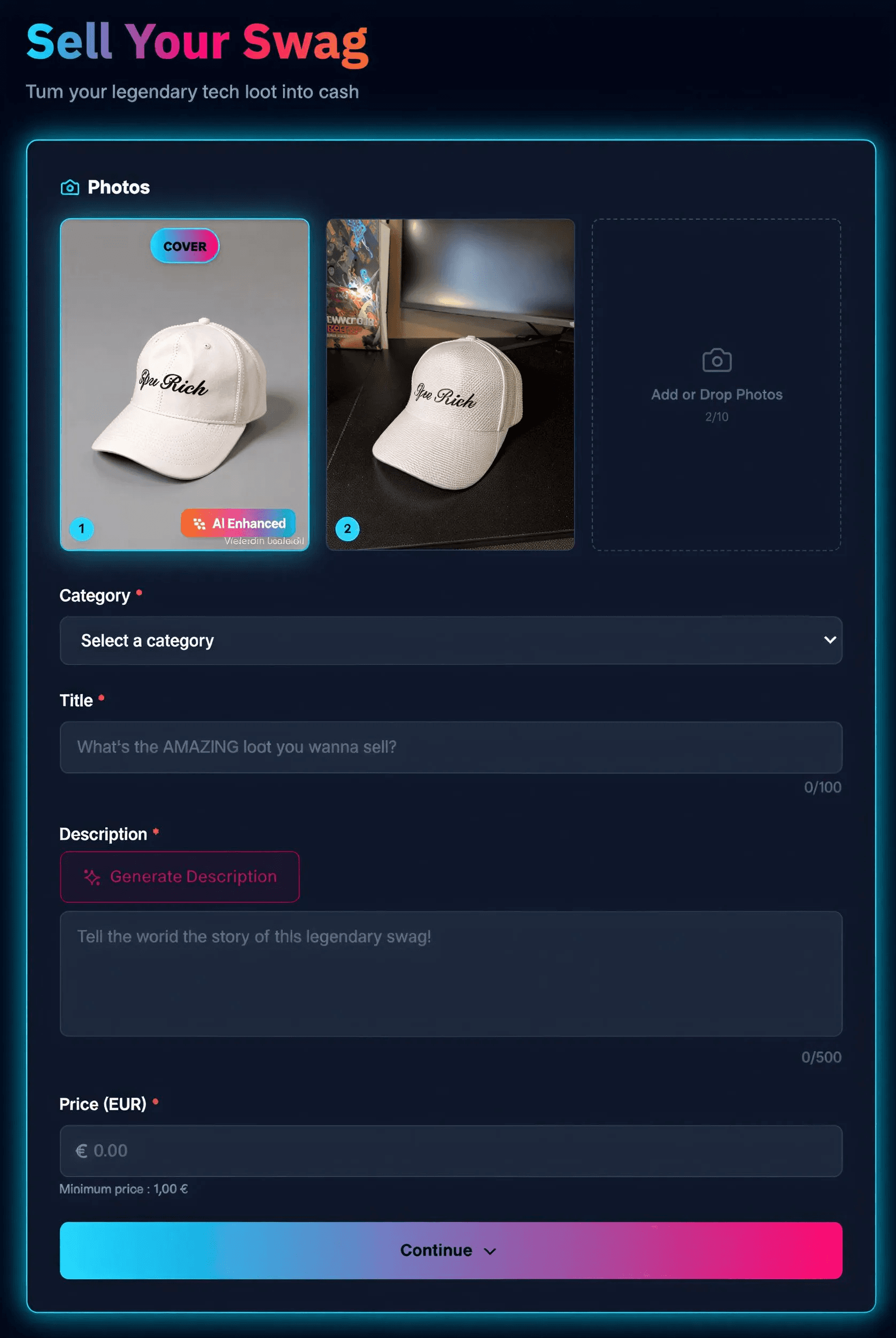
The first one was description generation. Using Gemini 3, the goal was to instantly turn a few inputs into a clean, usable item description. The success metric was simple. Fewer empty listings and less time spent thinking about what to write.
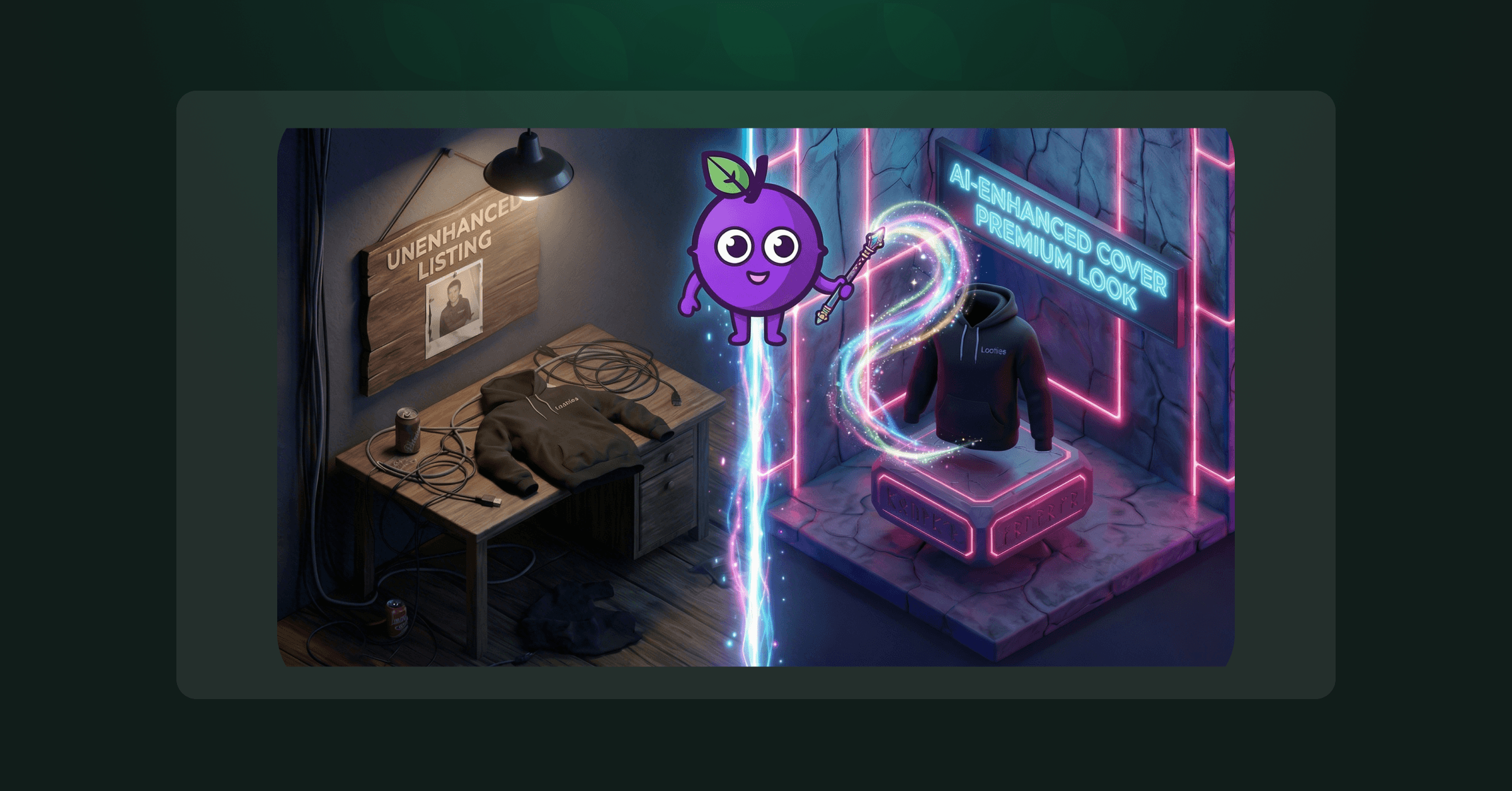
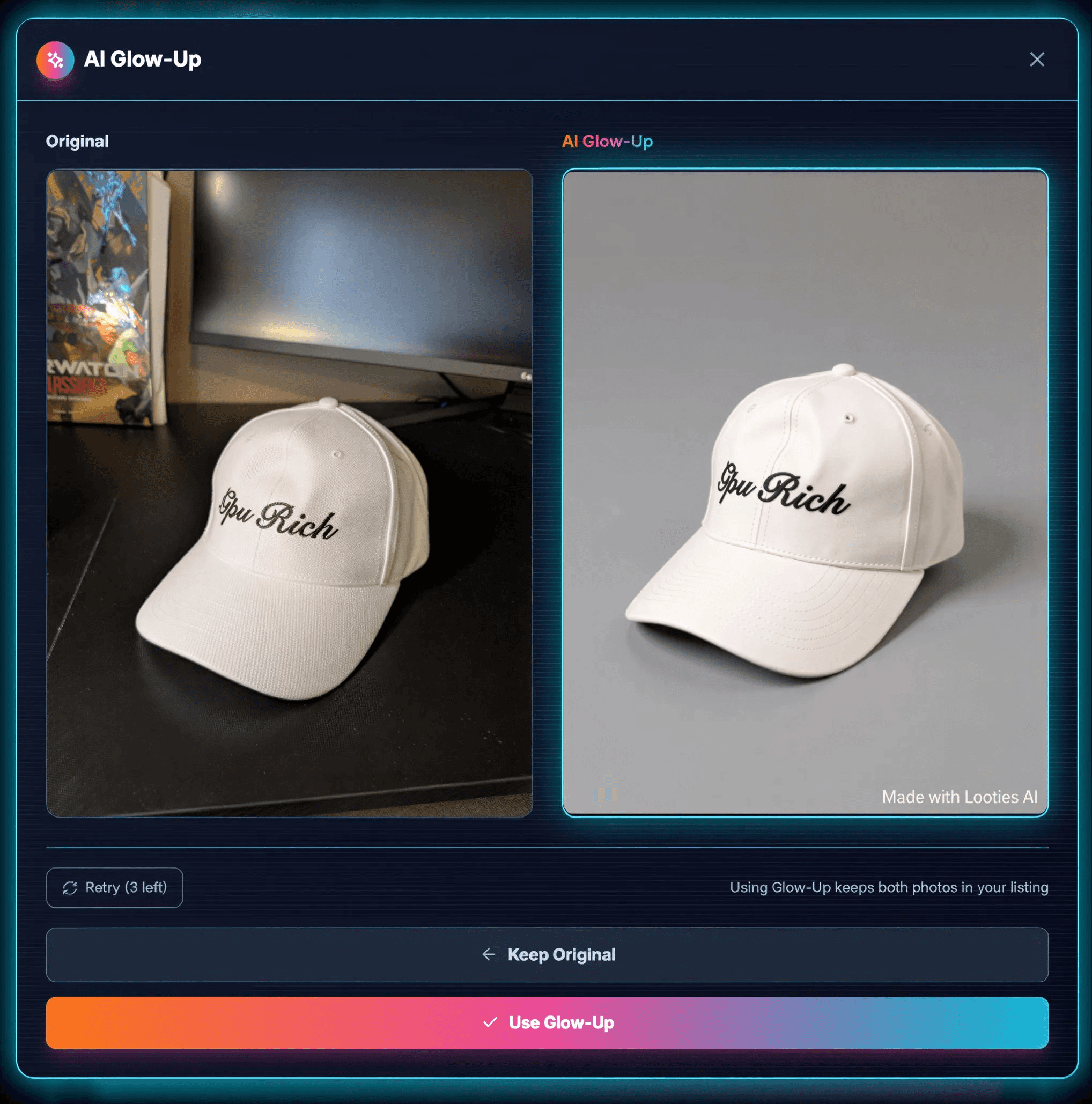
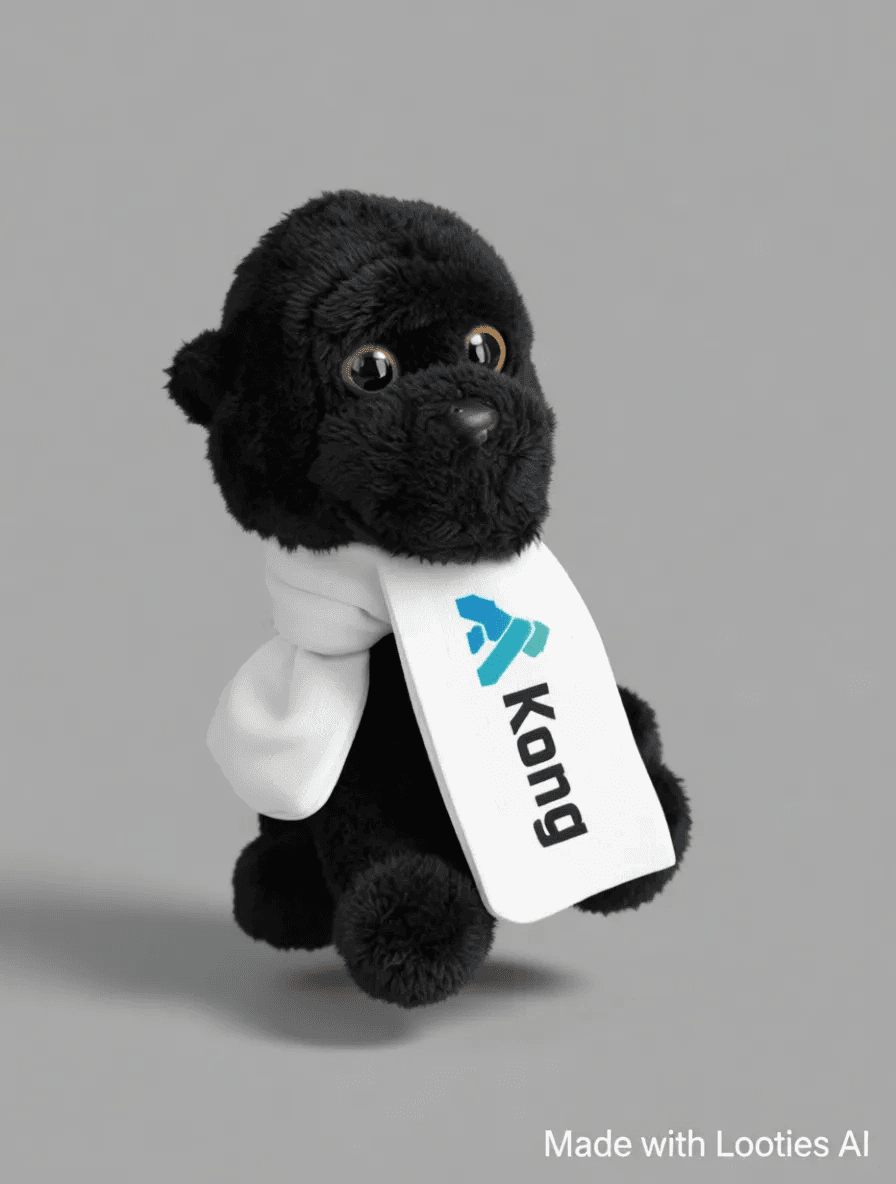
The second task was image enhancement for covers, and this one mattered even more. The idea was not to create artificial images or to hide reality. The goal was to make every listing look premium by default, with studio-like lighting and clean composition, while still keeping the original photos visible in the gallery.
AI was there to improve the cover, not to fake products.
The Constraints That Ruled Out Most Solutions
This is where things got difficult, and where many models that look great in demos simply did not survive contact with the product.
Latency was the first hard constraint. The entire image generation process had to stay under eight seconds, which match for attention time of humans on the Internet. Anything slower would break the listing flow and push users out.
Cost was the second constraint. Looties was not willing to pass AI costs to users, raise fees, or create a premium tier just to justify the feature. If inference costs scaled badly, the model was not an option.
The third constraint was workflow simplicity. There was no appetite for chaining multiple models together to do background removal, relighting, and upscaling in separate steps. That kind of setup painful to maintain in production.
Finally, output quality had to be consistent. Collector marketplaces live on trust. One uncanny or obviously artificial image can do more harm than ten good ones.
What Didn’t Work, Even If It Looked Promising
Looties tested a wide range of image models, including Flux Klein, Qwen Image Edit, Nano Banana, and several others. Some were fast but inconsistent. Others produced good images but were too slow or too expensive at scale. A few required multi-step orchestration that would have turned the listing flow into a technical minefield. None of them failed because they were bad models. They failed because they were not designed with this specific use case and these specific constraints.
Why P-Image Edit Fits Looties
Pruna’s P-Image Edit stood out not because of flashy claims, but because it aligned with all the constraints Looties cared about.
Image generation stayed comfortably under the eight-second threshold, which meant it could run in-line during listing creation. Inference costs were predictable and low enough to absorb without changing pricing or limiting usage. Output quality was consistent with clean lighting, realistic textures, and results that felt like amateur photography rather than AI tricks. And the text rendering is really good, allowing a watermark to be added without post-processing.
Just as importantly, it was a single API. That simplicity made it possible to ship and maintain the feature without turning the product into an experiment lab.
The Impact on Usage and Behavior
Once the feature shipped, the signal was immediate.
All of sellers try the AI-generated cover when creating a listing. Right now, 100% all published listings include an AI-enhanced image, while still keeping real photos in the gallery. Users did not need education or incentives. They simply used what was there because it made their listings look better with no extra effort.
At the same time, listing completion improved. Fewer users dropped off midway through the flow, and time-to-list decreased. The AI feature did exactly what it was supposed to do. It removed friction instead of adding it.
Why This Works Beyond the Tech
What made this project truly challenging was not the integration itself. From a technical standpoint, P-Image Edit was straightforward to plug in. The hardest part was something else entirely: figuring out how to talk to the model.
Prompt engineering turned out to be the most complex task in the whole project. Not in a technical sense, but in a creative one. The difference between an average output and a real-life-photography result came down to how precisely the model was instructed, how constraints were phrased, and how intent was expressed.
What is interesting is that the learning curve was mostly creative, not technical. The real work was about defining what a “good” photo means for a peer-to-peer marketplace and translating that into clear instructions the model could follow.
That creative layer is often underestimated, but in practice, it is where most AI apps either succeed or fail. In this case, it is precisely what turned a capable image model into a production-grade feature that users immediately adopted.
It’s a Wrap
This is not a story about adding AI to a product. It’s about enabling a business to launch with
Most models fail not because they are weak, but because they are not prompted well enough or because they do not stand in the sweet spot between cost/latency/quality.
In this case, P-Image Edit worked because it was able to match all the boxes. For Looties, that made the difference between a nice idea and a feature that actually ships, scales, and gets used. Check their website or their Instagram account for more inspiration on how Pruna AI models support their business!
・